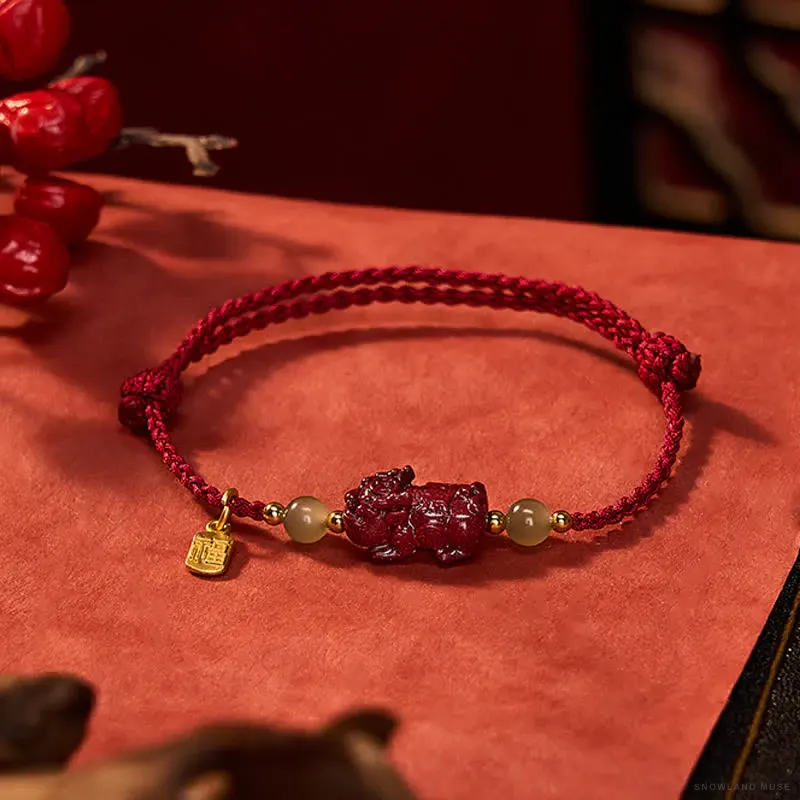
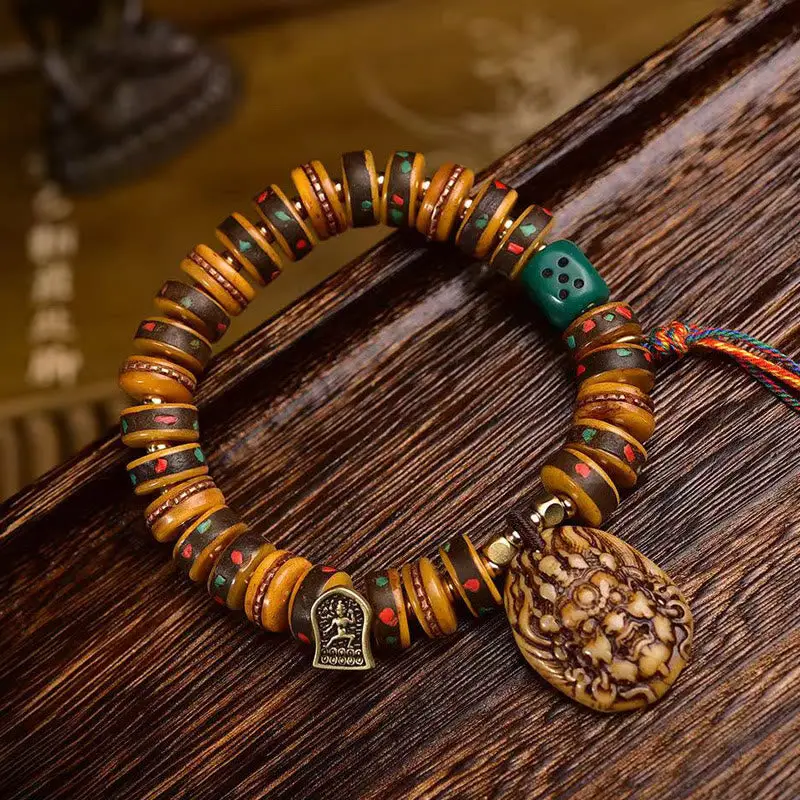
The cinnabar carries the design, and it is a deep red material with a dense, almost matte surface. Set against that, the jade is a smooth, subtly translucent stone with a fine internal grain. The proportions are kept to a strand that sits at the wrist, and the design belongs to Tsering Treasures, a series centred on warm metals, carved detail and mixed materials. The vajra appears as a crossed, symmetrical metal form. It is a recognisable Himalayan Buddhist shape, used here as a precise geometric centre point for the design. The Buddha motif is rendered as a seated figure in shallow relief. It is drawn from Buddhist visual tradition and gives the design a composed, symmetrical centre; its meaning sits with the wearer rather than in any promised outcome. A mantra line is inscribed across the surface, following a Tibetan-language formula and reproduced as a design element. It is presented as cultural context rather than as a ritual service or a charged object.
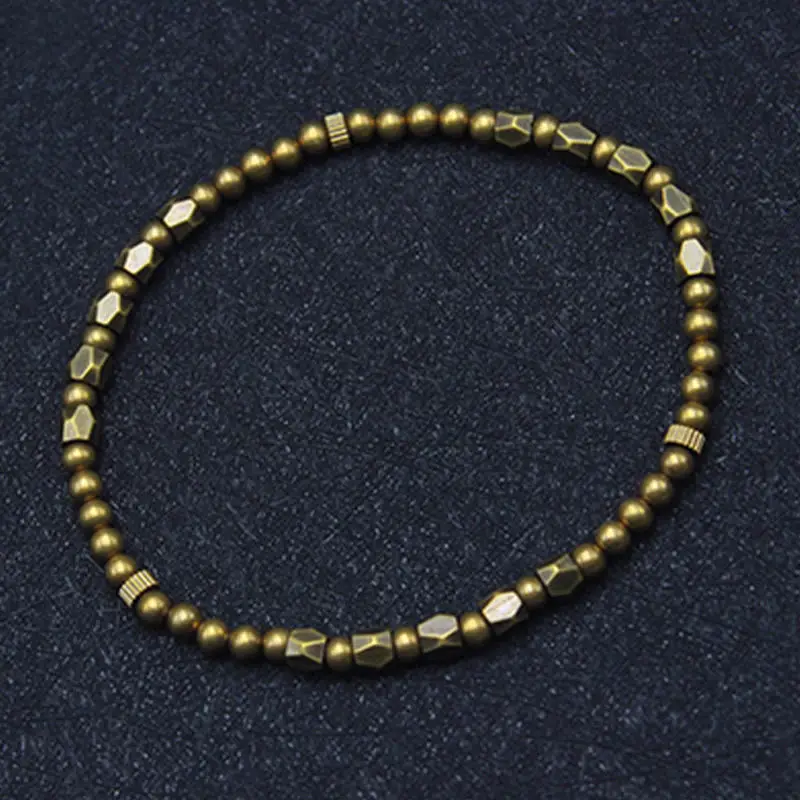
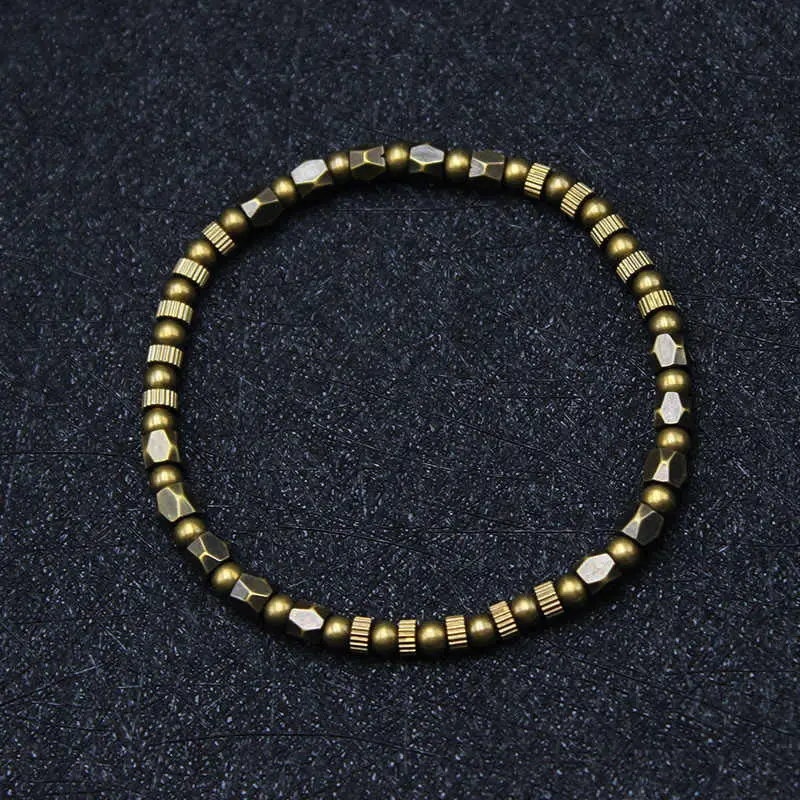
Material behaviour explains most of what happens to a piece after a year of wear, so it is worth being specific. For the cinnabar, the behaviour matters more than the finish: the colour is even and strong, and the surface is firm but dislikes abrasion. Jade needs a separate note: it is tough and forgiving in daily wear, and the surface takes a gentle sheen with handling. The copper appears as a warm reddish metal with a soft, low-glare surface. Against the skin, it darkens toward a brown patina with wear and skin contact, which some owners prefer and others polish back. Inside the piece, the textile cord is a closely braided cord whose matte surface shows the weave up close. Handled often, it softens further with handling, and a strand worn every day will eventually lift where it crosses a metal edge.
It is offered as Koi Fish Pi Xiu (Wrist Circumference: 7.1 in / 18 cm), which is the configuration shown in the photographs. If two options are close, say how you plan to wear the piece and we will say which one suits it better. What the motif carries is symbolic, and the meaning it takes on is the wearer’s to decide. Stone and organic materials are never identical twice: minor variation in tone and figure is part of the material. The piece, its dimensions and the preparation window are set out in writing first, and only then is payment taken.
Care
Avoid water, heat and household chemicals, and store the piece separately to prevent scuffing. Avoid impact at thin edges and keep it away from household chemicals; a soft dry cloth is enough. Wipe it dry after wear and store it away from damp air; polish only with a copper-safe cloth if you want the original brightness. Keep it dry, avoid perfume and household chemicals, and replace the cord once the fibres begin to lift. Wipe it after wear, store it dry and away from direct sun, and it will need very little else.
A note on meaning
Symbols and materials may support reflection, memory or ritual. They are not medical treatment and do not guarantee wealth, protection, healing or any spiritual result.