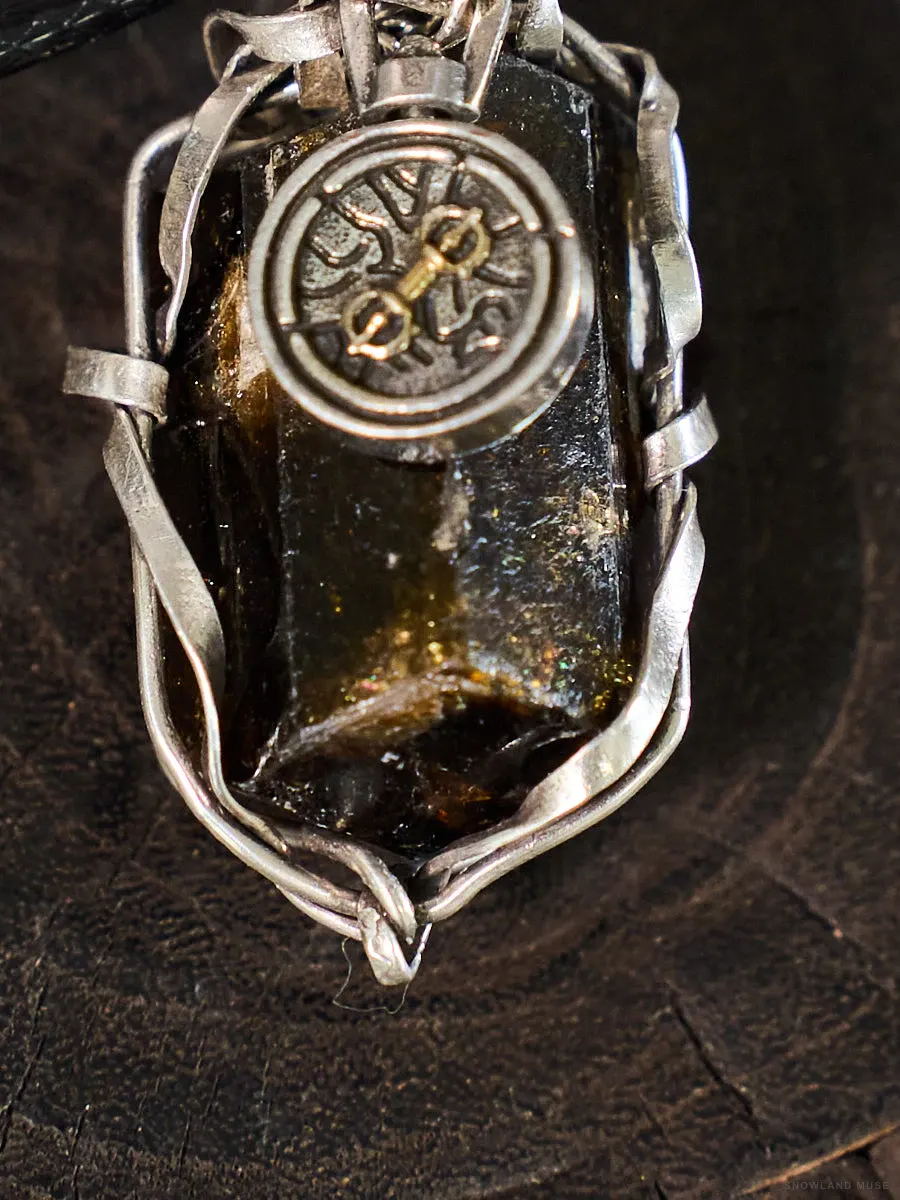
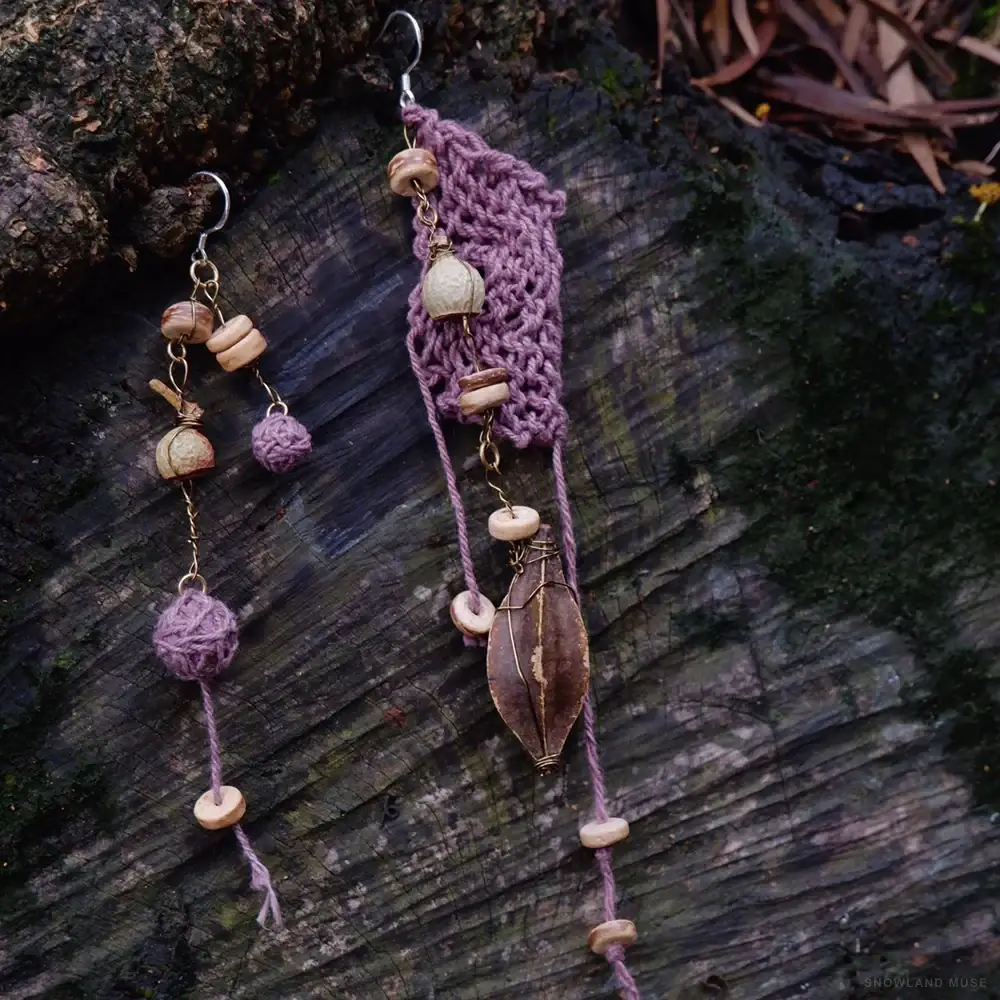
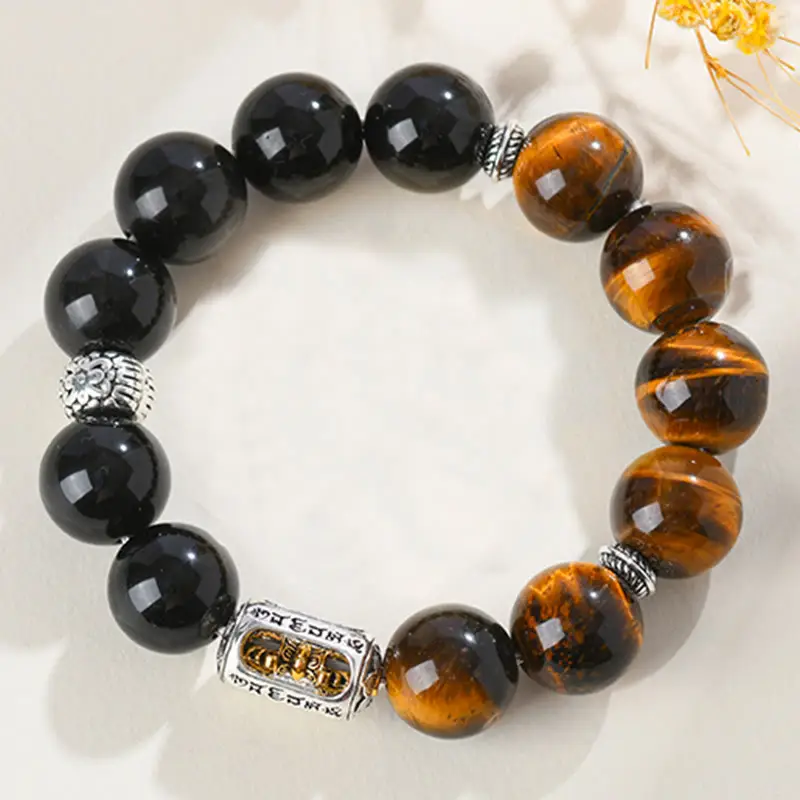
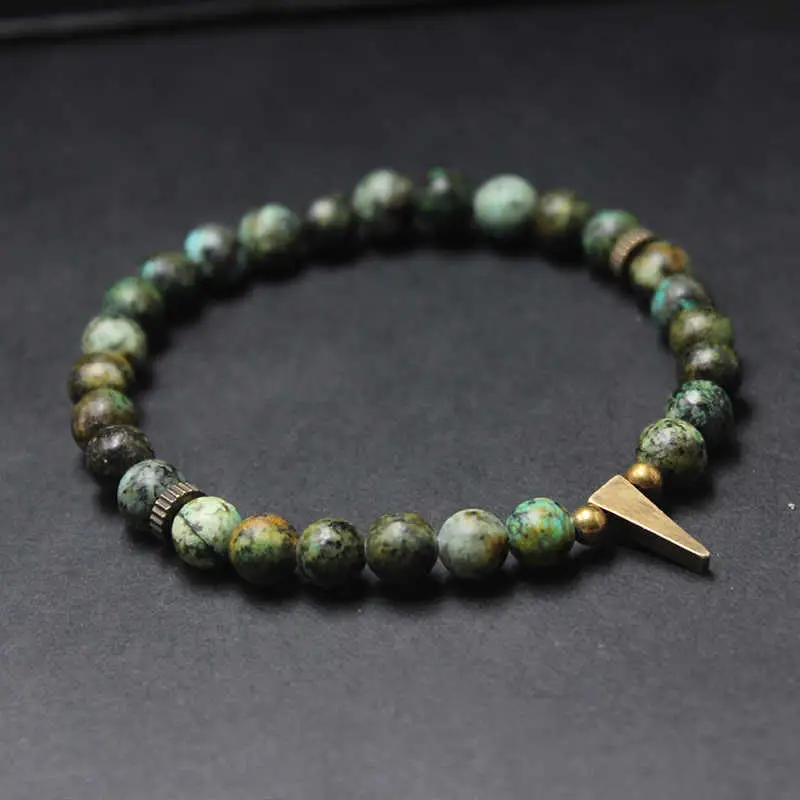
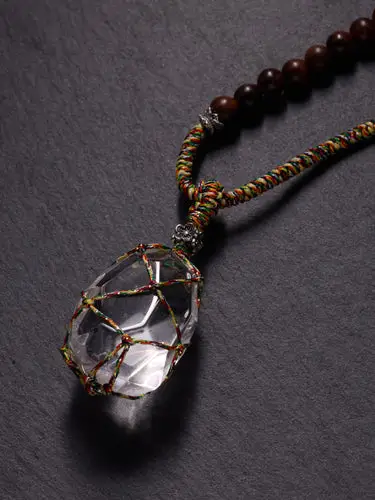
What you notice first is the black tourmaline — a dark, near-opaque stone with fine lengthwise striations along each bead. The second note is the silver-tone metal — a bright silver-coloured metal finish rather than solid silver. The proportions are kept to a hanging piece that sits at the collarbone, and the design belongs to Lhasa Moments, a series built around highland light, stone colour and architectural lines. The vajra appears as a crossed, symmetrical metal form. It is a recognisable Himalayan Buddhist shape, used here as a precise geometric centre point for the design.
Each material behaves differently, so it is worth knowing how the parts age before you choose. Black Tourmaline is a different case in wear: it is hard and stable in wear, but a rougher, unpolished surface shows handling more readily than a polished one. The silver-tone metal appears as a bright cool-toned metal finish, plated rather than solid silver. Over months of wear, the finish holds up well day to day, though a plated layer thins gradually where it rubs.
The fit is set from the measurement you supply, so nothing is assumed. Anything not visible in the photographs is answered against the actual piece before you decide. The theme here is courage as a daily cue; nothing about the piece is a promise of safety. Slight differences in shade, inclusion and grain between pieces are inherent to the materials. Nothing is charged until the exact piece and its measurements have been confirmed with you in writing.
Care
Wipe it with a soft dry cloth; a deliberately raw surface should not be polished. Keep it away from water, perfume and abrasive cloths so the finish lasts longer. Take it off before swimming, bathing or washing up; prolonged water is the most common cause of avoidable wear. Store the piece separately so it does not scratch against harder jewellery.
A note on meaning
Symbols and materials may support reflection, memory or ritual. They are not medical treatment and do not guarantee wealth, protection, healing or any spiritual result.