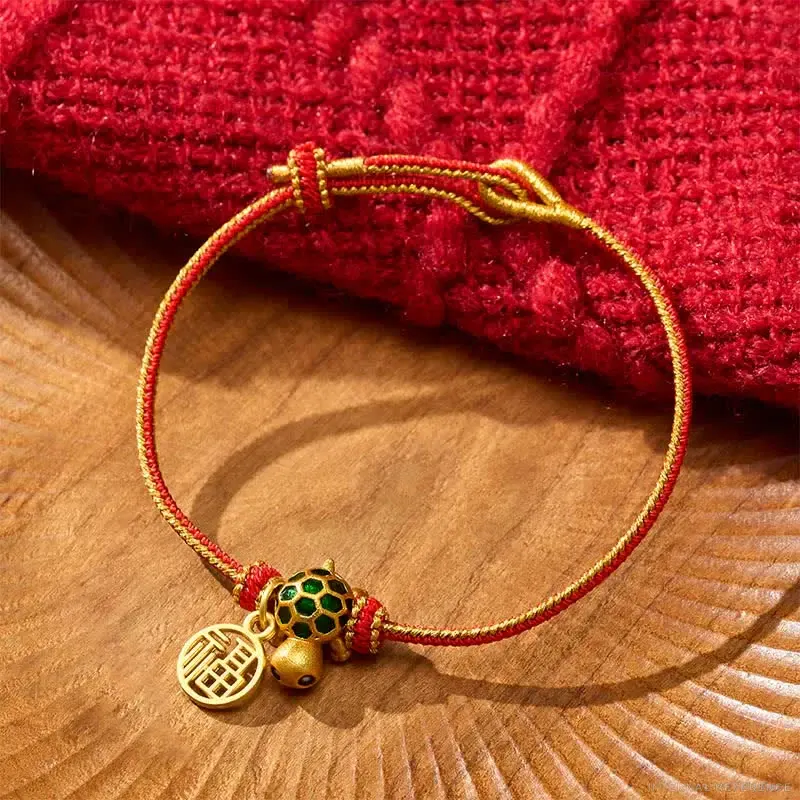
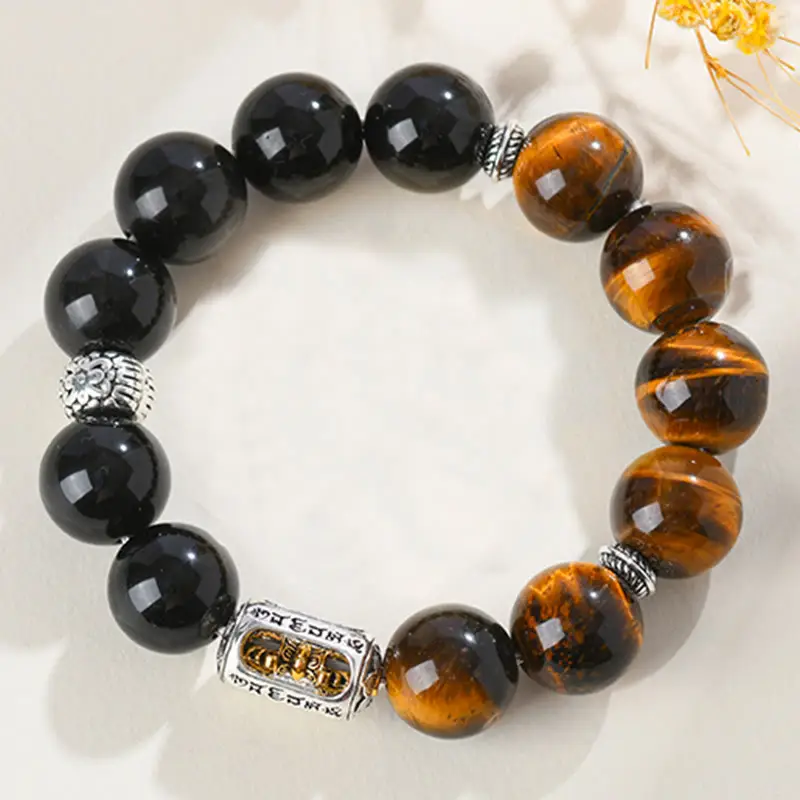
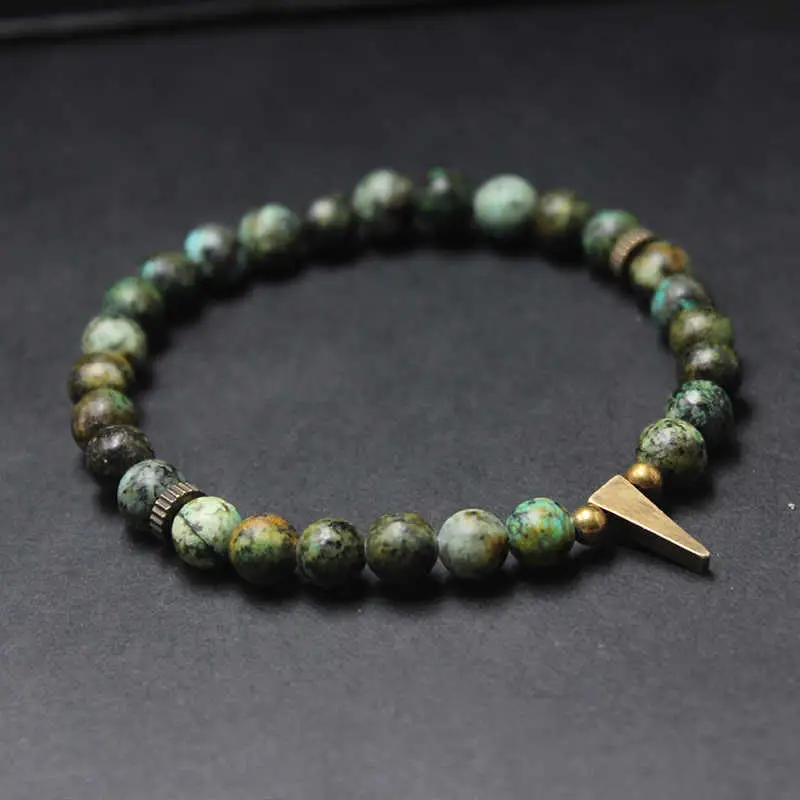
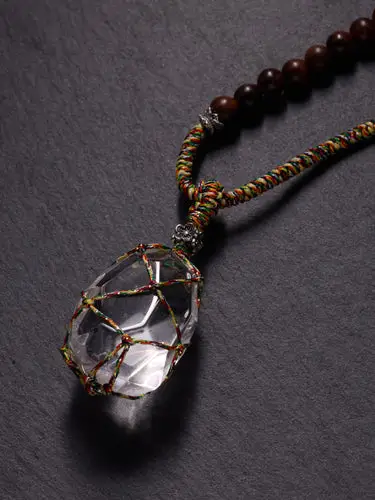
Start with the copper: a warm reddish metal with a soft, low-glare surface. Against that surface, the textile cord sits as a tight woven cord with a matte, slightly fibrous surface. It takes the form of a strand that sits at the wrist, and it belongs to Lhasa Moments, a series built around highland light, stone colour and architectural lines. The vajra appears as a crossed, symmetrical metal form. It is a recognisable Himalayan Buddhist shape, used here as a precise geometric centre point for the design. A mantra line is inscribed across the surface, following a Tibetan-language formula and reproduced as a design element. It is presented as cultural context rather than as a ritual service or a charged object.
Here is how each part of the piece behaves over time. Inside the piece, the copper is a warm red-brown metal that never glares back at you. Handled often, its surface deepens in tone the longer it is worn, so the colour you receive keeps moving. The textile cord appears as a closely braided cord whose matte surface shows the weave up close. Over months of wear, it softens further with handling, and a strand worn every day will eventually lift where it crosses a metal edge.
This configuration is sized for a 5.9–7.1 in (15–18 cm) wrist. Both options are made to the same visual proportions, so the choice is about fit rather than look. The theme here is courage as a daily cue; nothing about the piece is a promise of safety. Minor variation in tone and surface between pieces is normal for hand-finished metal and cord. Nothing is charged until the exact piece and its measurements have been confirmed with you in writing.
Care
Wipe it dry after wear and store it away from damp air; polish only with a copper-safe cloth if you want the original brightness. Keep it dry, avoid perfume and household chemicals, and replace the cord once the fibres begin to lift. Take it off before swimming, bathing or washing up; prolonged water is the most common cause of avoidable wear. Put it on last and take it off first, and keep it in its own pouch between wears.
A note on meaning
Symbols and materials may support reflection, memory or ritual. They are not medical treatment and do not guarantee wealth, protection, healing or any spiritual result.