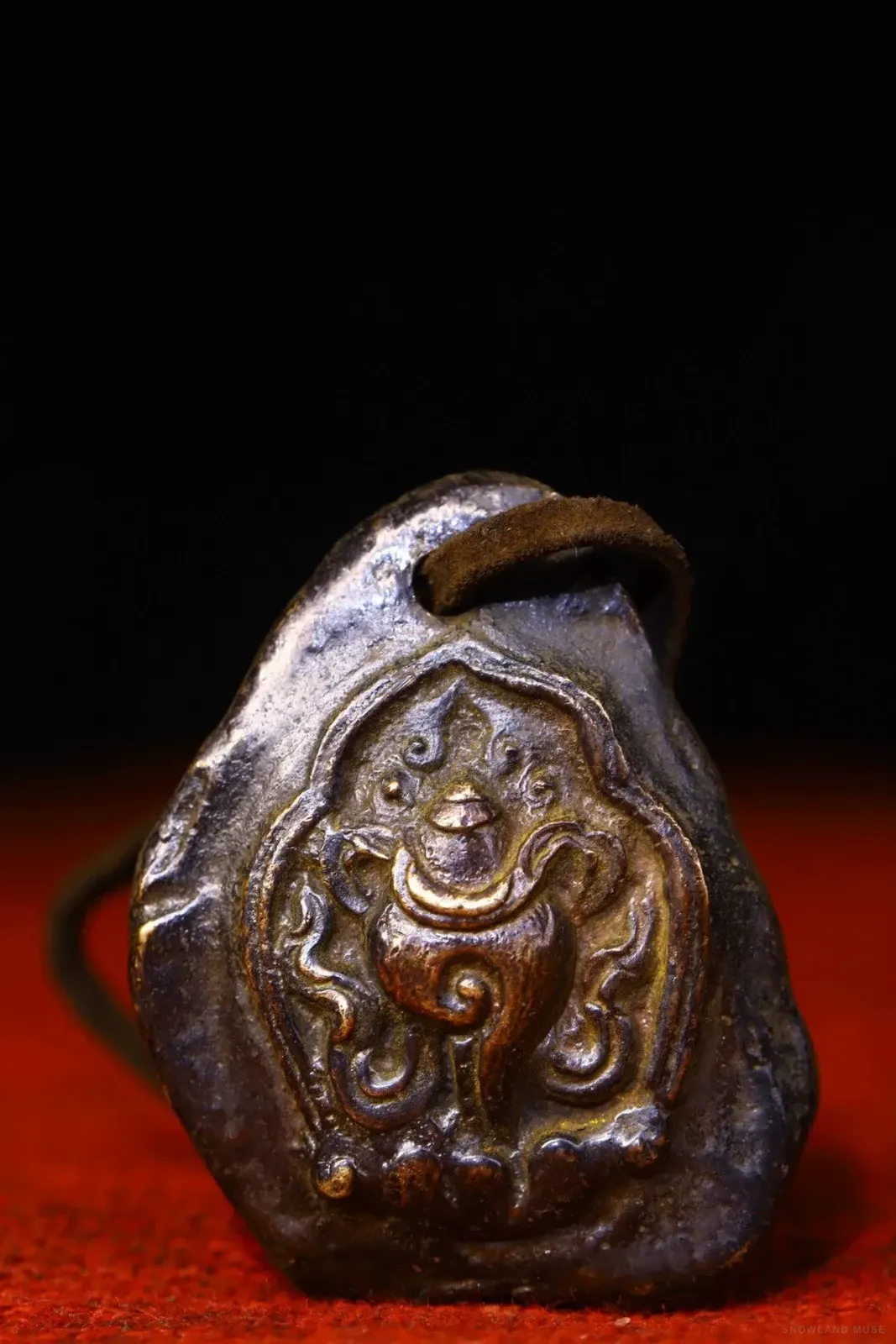
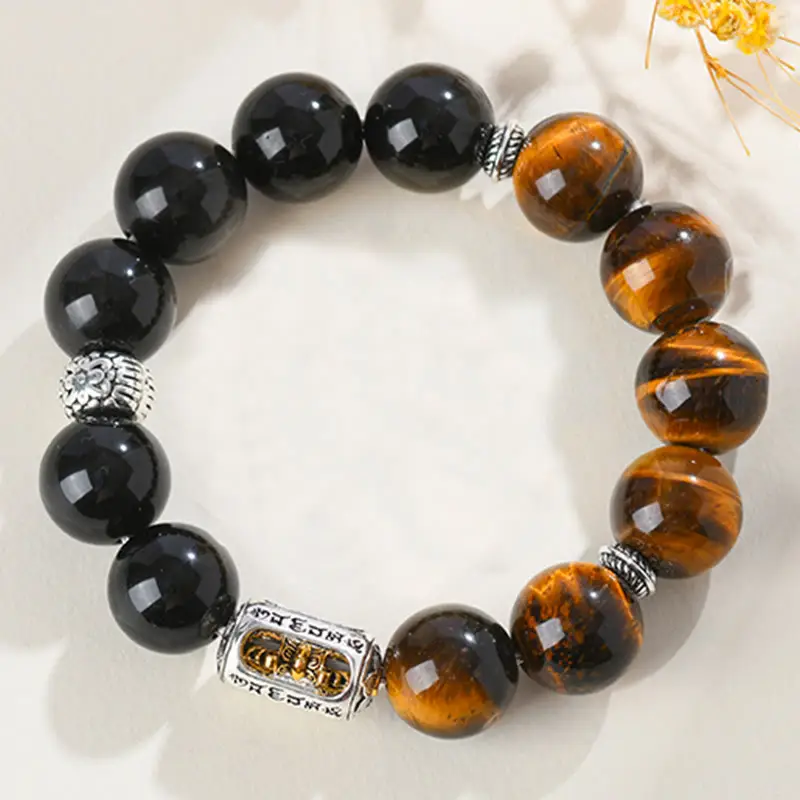
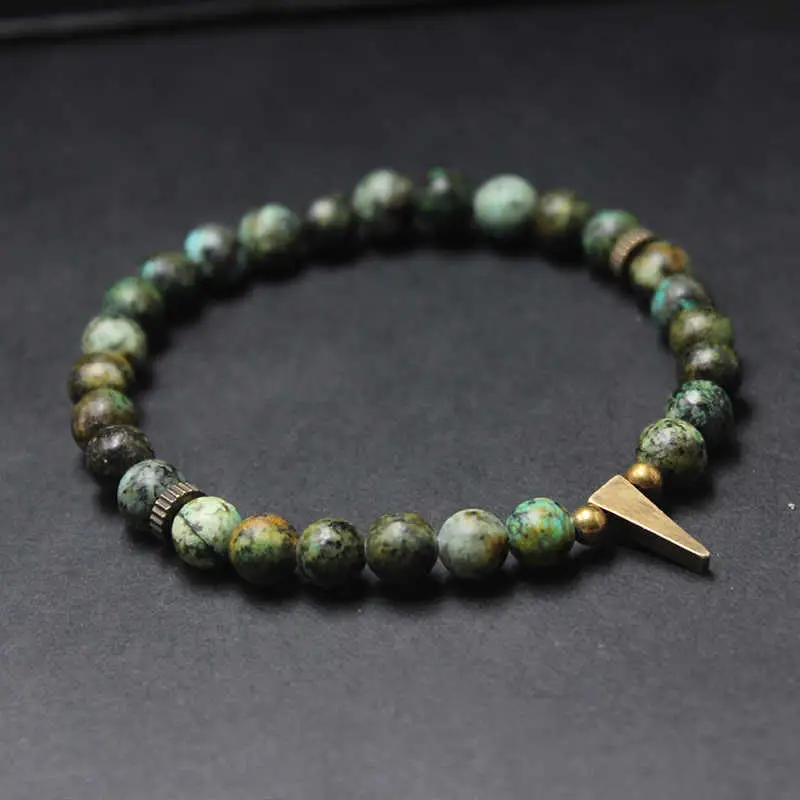
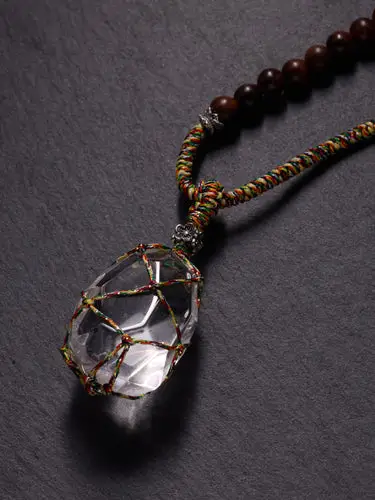
The thokcha leads here, and it is a dark, heavily patinated metal surface with an uneven, hand-worked feel. The form is a hanging piece that sits at the collarbone, and it belongs to Lhasa Moments, a series built around highland light, stone colour and architectural lines. The Buddha motif is rendered as a seated figure in shallow relief. It is drawn from Buddhist visual tradition and gives the design a composed, symmetrical centre; its meaning sits with the wearer rather than in any promised outcome. The vajra appears as a crossed, symmetrical metal form. It is a recognisable Himalayan Buddhist shape, used here as a precise geometric centre point for the design.
Each component is listed with the way it behaves, so nothing about the ageing comes as a surprise. Thokcha is a different case in wear: the patina is part of the surface and will shift slowly with handling rather than stay uniform.
Sizing is confirmed from your own measurement rather than from a standard label. Anything not visible in the photographs is answered against the actual piece before you decide. What the motif carries is symbolic, and the meaning it takes on is the wearer’s to decide. Natural materials vary, so tone, mark and grain will differ slightly from the photographed piece. The piece, its dimensions and the preparation window are set out in writing first, and only then is payment taken.
Care
Keep it dry, do not over-polish it, and wipe it gently with a soft cloth. Water, perfume and cleaning products are the three things most likely to shorten its life. Wipe it after wear, store it dry and away from direct sun, and it will need very little else.
A note on meaning
Symbols and materials may support reflection, memory or ritual. They are not medical treatment and do not guarantee wealth, protection, healing or any spiritual result.