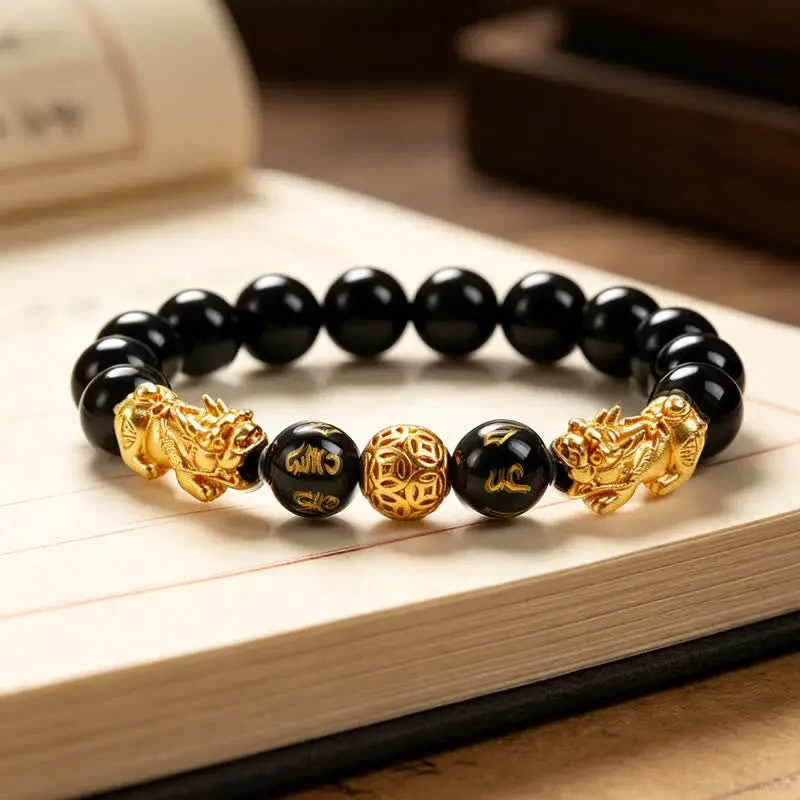
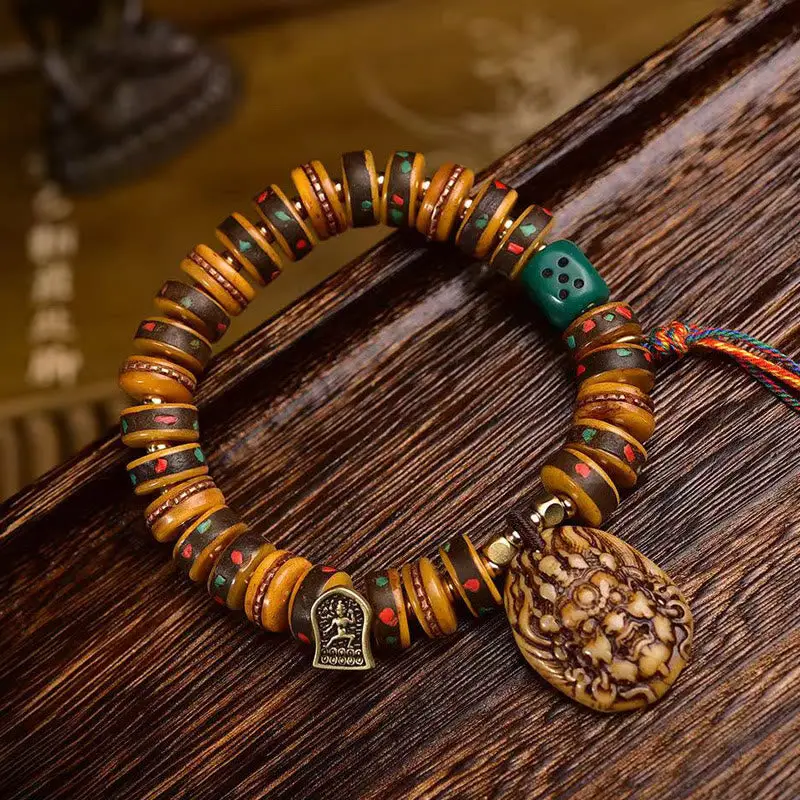
Read at arm’s length the piece is mostly obsidian: a near-black volcanic glass with a deep, mirror-like surface. Against that surface, the copper sits as a warm reddish metal with a soft, low-glare surface. Physically it is a strand that sits at the wrist. The piece belongs to Tsering Treasures, a series centred on warm metals, carved detail and mixed materials. The pi xiu appears as a compact seated creature figure. It is a traditional Chinese motif, used here for the strength of its silhouette and its place in that visual tradition.
What follows is a plain description of each material, including how it changes. Obsidian needs a separate note: it takes a very high polish but is more brittle than crystalline stone, so it chips rather than scratches. The copper appears as a warm red-brown metal that never glares back at you. Over months of wear, its surface deepens in tone the longer it is worn, so the colour you receive keeps moving.
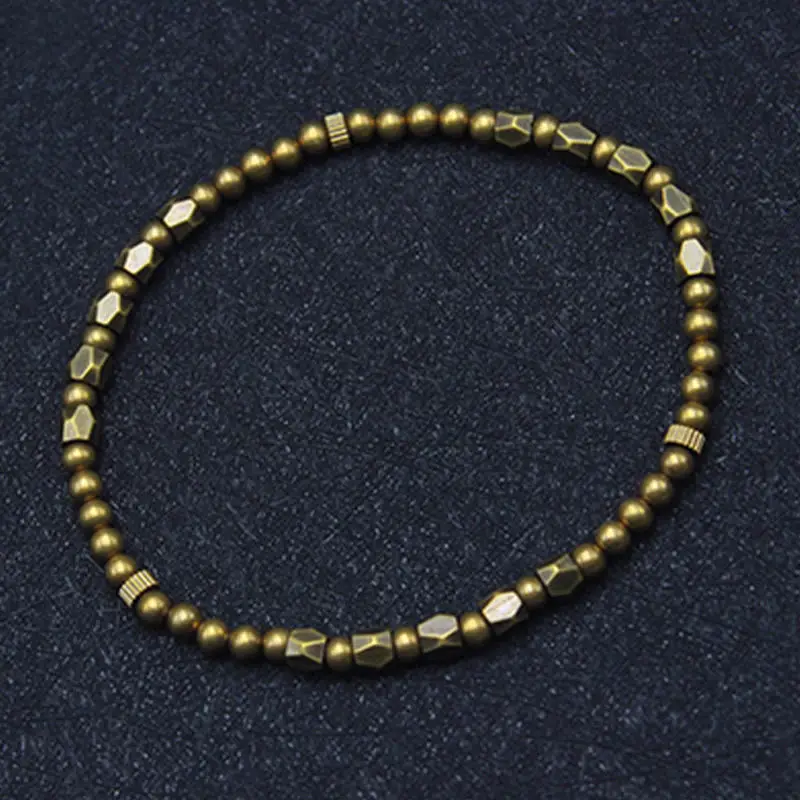
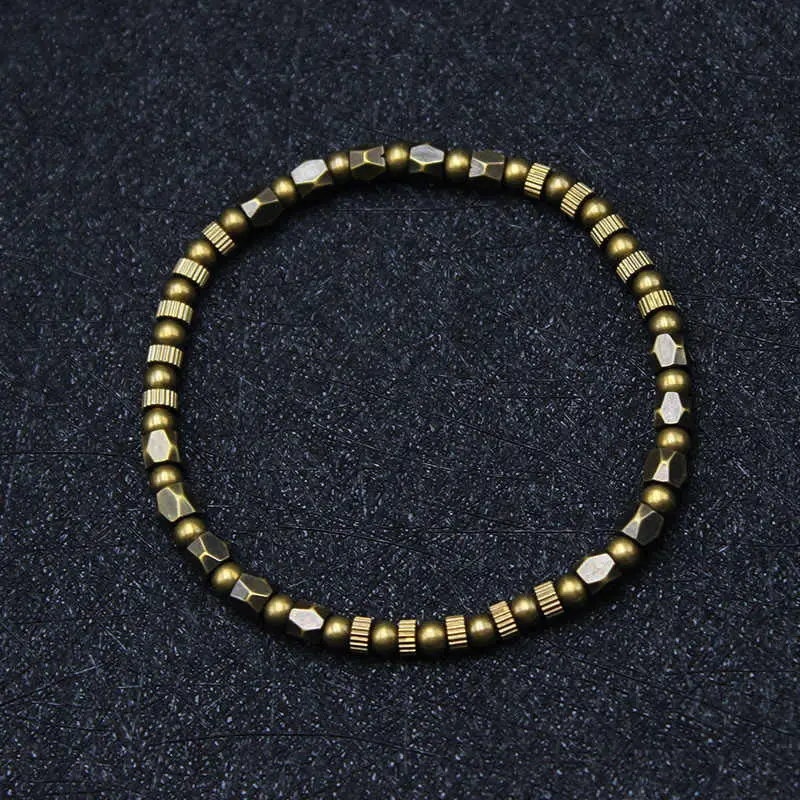
The piece lists two configurations, namely “Golden” and “Silvery”. Ask for extra photographs of the exact piece if any detail matters to your decision. The design language points at balance; it makes no claim about what the piece does. Colour, veining and grain differ between individual stones and beads, which is normal rather than a fault. Final measurements, availability and the preparation window are all confirmed in writing before payment.
Care
Avoid impact at edges and store it separately so the polished surface is not marked. Wipe it dry after wear and store it away from damp air; polish only with a copper-safe cloth if you want the original brightness. Take it off before swimming, bathing or washing up; prolonged water is the most common cause of avoidable wear. Store the piece separately so it does not scratch against harder jewellery.
A note on meaning
Symbols and materials may support reflection, memory or ritual. They are not medical treatment and do not guarantee wealth, protection, healing or any spiritual result.