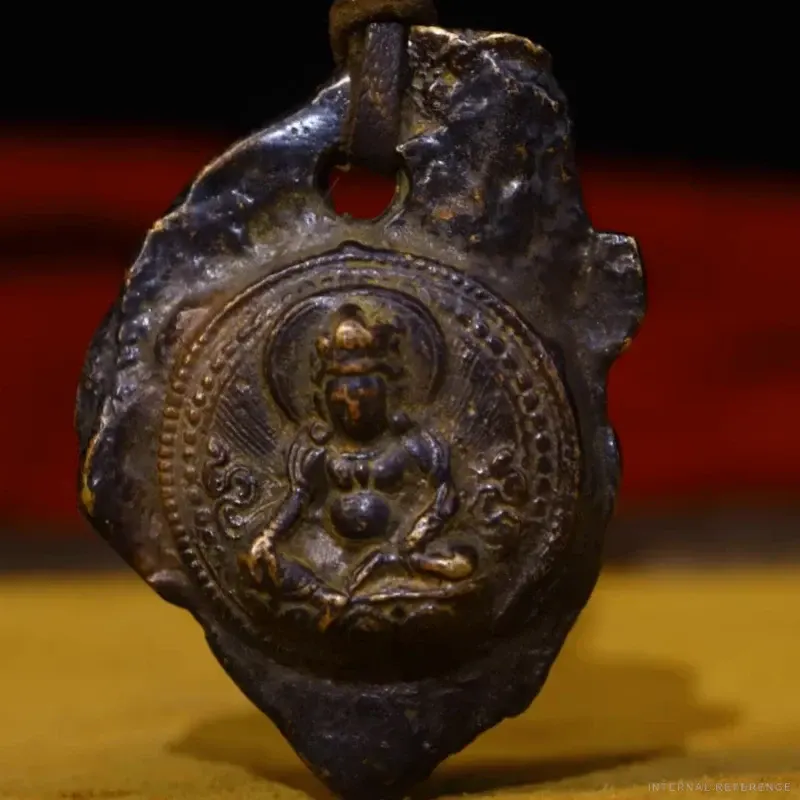
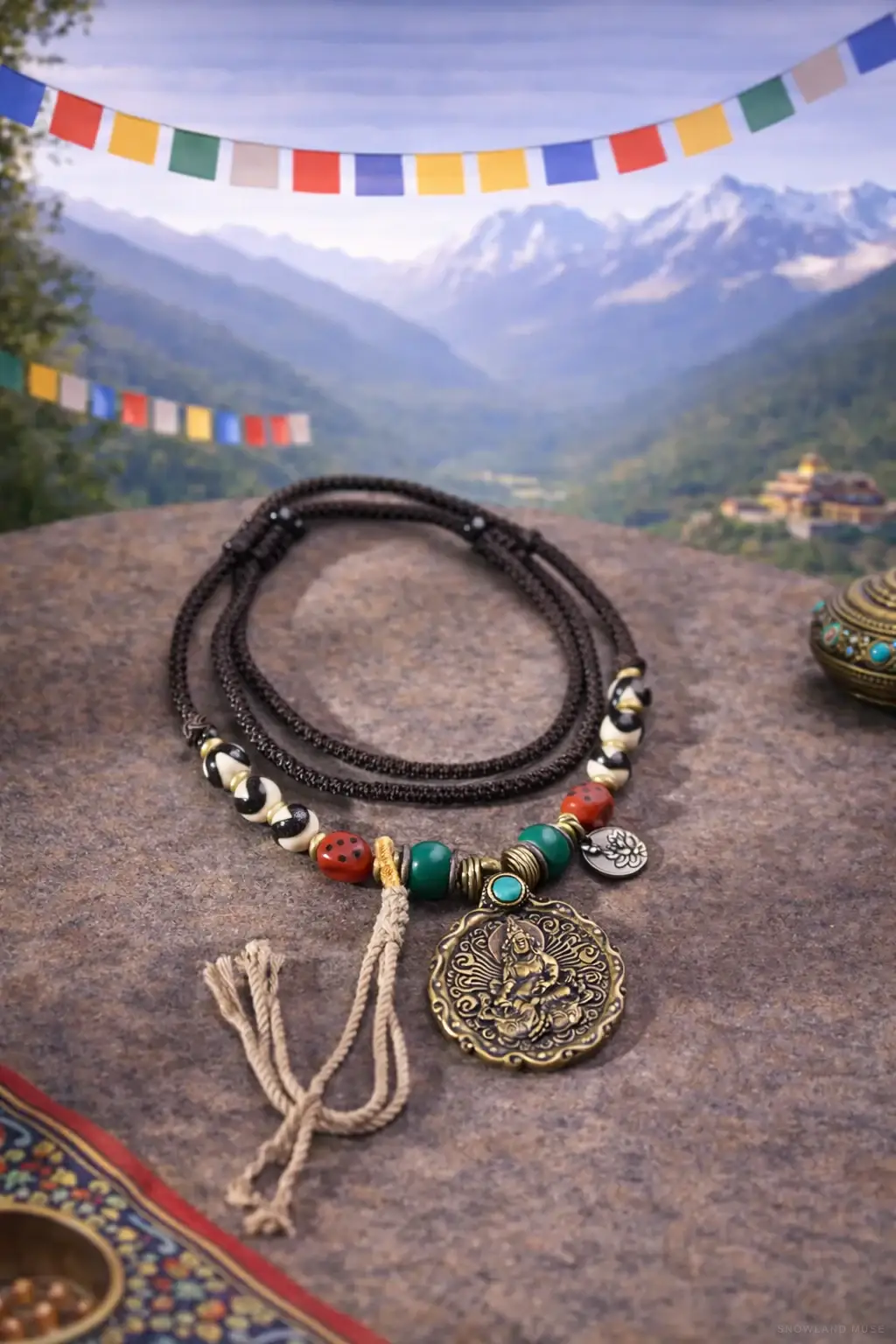
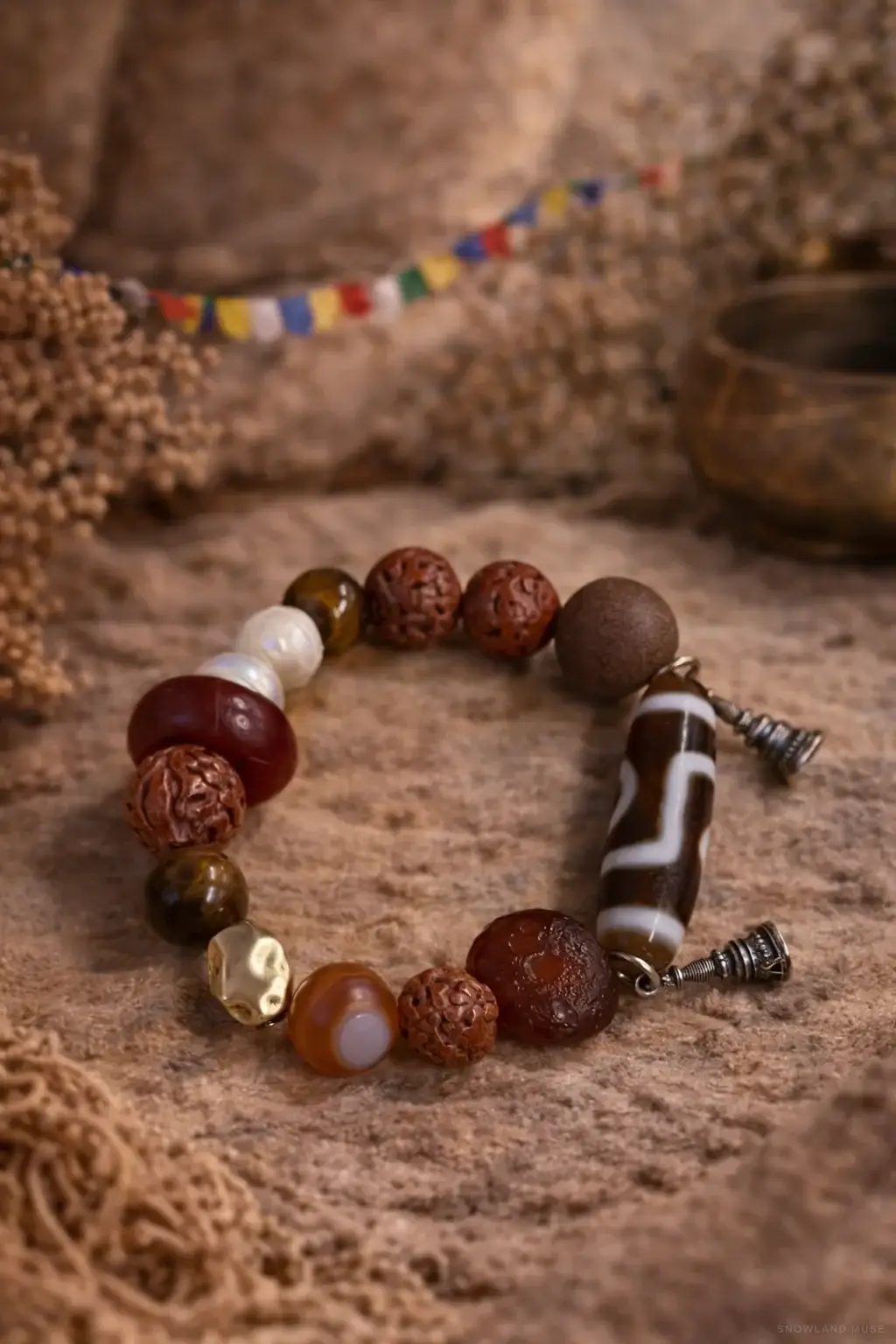
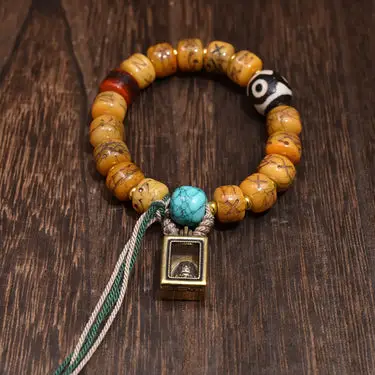
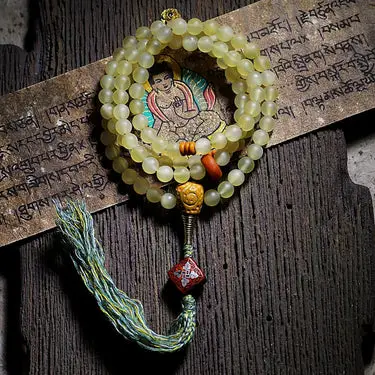
Built around Dzi-style bead, the piece begins with an agate bead worked with eye, stripe or wave patterns in contrasting tones. Beside it, the thokcha is a dark, heavily patinated metal surface with an uneven, hand-worked feel, so the piece reads in two registers at once. It takes the form of a piece made to be handled rather than worn, and it belongs to the Dzi-style bead series, where the bead pattern leads the design and the companion materials support it. The Buddha motif is rendered as a seated figure in shallow relief. It is drawn from Buddhist visual tradition and gives the design a composed, symmetrical centre; its meaning sits with the wearer rather than in any promised outcome. The Dzi-style motif appears as eye, stripe and wave patterns worked into the agate itself. These patterns belong to the dzi bead tradition, and the label describes the bead design only — not the age, origin or history of the piece.
Material behaviour explains most of what happens to a piece after a year of wear, so it is worth being specific. The Dzi-style bead appears as an agate bead whose eye and stripe patterns sit in contrasting bands across the stone. Against the skin, because the pattern is inside the stone rather than applied, it does not wear off with handling. For the thokcha, the behaviour matters more than the finish: the patina is part of the surface and will shift slowly with handling rather than stay uniform.
We ask for a measurement rather than offering a generic size, and confirm the finished fit in writing. If two options are close, say how you plan to wear the piece and we will say which one suits it better. The theme is strength as a quiet cue; no result is implied by the material. Each selected piece has its own colour balance and marking, so treat the photograph as a close guide rather than an exact sample. The piece, its dimensions and the preparation window are set out in writing first, and only then is payment taken.
Care
Care for it as you would a polished agate: keep it away from chemicals and impact, and wipe it dry after wear. Keep it dry, do not over-polish it, and wipe it gently with a soft cloth. Remove it before a shower or a swim, and dry it fully if it does get wet. Wipe it after wear, store it dry and away from direct sun, and it will need very little else.
A note on meaning
Symbols and materials may support reflection, memory or ritual. They are not medical treatment and do not guarantee wealth, protection, healing or any spiritual result.